

Now through April 27 | Landmark Century Centre Cinemas, 2828 N. Clark St., Chicago
Every April, the Landmark Century Centre Theatres on Clark Street quietly becomes one of the most important movie theaters in the country for Latino Filmmakers. Not because of its perfectly situated physical location, but because of what’s playing inside.
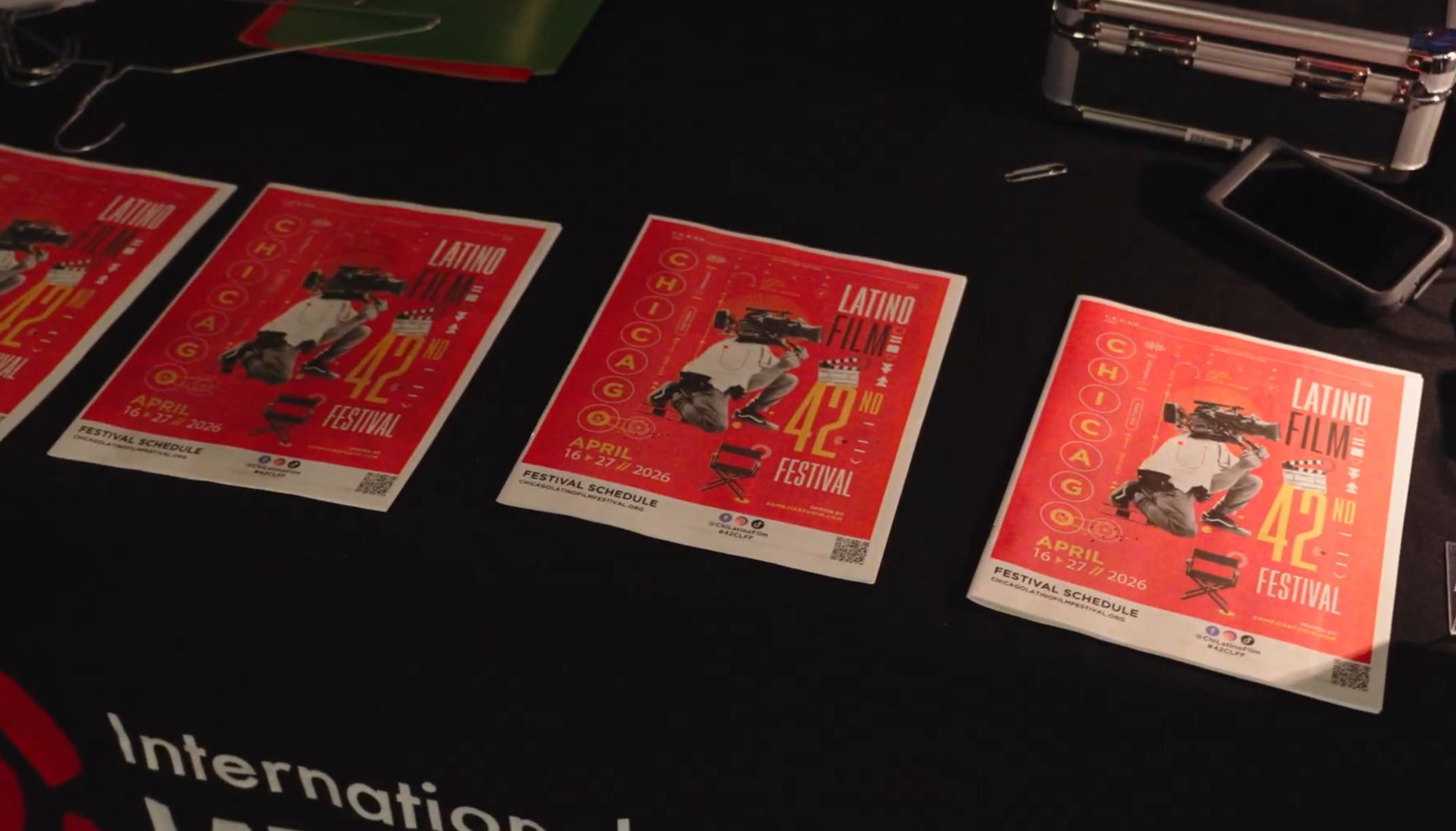
The 42nd Chicago Latino Film Festival kicked off last Thursday and it’s hard to believe we are already 4 days in and in full swing through April 27. If you haven’t bought a ticket yet, now’s the time. Several films, including Opening Night, have sold out. Frankly, you don’t want to miss the perfect lineup in this year’s showcase. Fifty-one features, thirty-one shorts, and fifteen premieres across 22 Latin and Iberian countries. Like Brigadoon, once the time passes most of these films vanish from Chicago screens, possibly never to be seen again in this City.
So here’s the honest friend’s guide to what’s worth your Thursday night, your Saturday afternoon, or your “I’ll sleep when it’s over” evening.
Start with the documentaries, because this year’s non-fiction lineup is genuinely extraordinary. The one that’s generating the most conversation — and deserves every bit of it — is Under the Flags, the Sun, a Paraguayan film by first-time director Juanjo Pereira that won the FIPRESCI Critics’ Prize at the Berlin Film Festival. Pereira spent years hunting down over 120 hours of archival footage from around the world to reconstruct Alfredo Stroessner’s 35-year dictatorship — the propaganda reels, the newsreels, the carefully managed mythology of one of the longest authoritarian regimes in Latin American history. What makes it land so hard is the kicker: Pereira thought he was excavating the past. Then he realized the families who ran that regime still run Paraguay. Go see it and tell us that doesn’t follow you home.
On a completely different frequency — but equally unmissable — is Paquito D’Rivera: From Carne con Frijol to Carnegie Hall, a sixty-minute documentary portrait of the 16-time Grammy-winning Cuban clarinetist who defected in 1980 and proceeded to have one of the most joyful careers in jazz history. Director Juan Mandelbaum filmed him alongside Chucho Valdés and Yo-Yo Ma, and the result is exactly what a good music documentary should be: it makes you want to drop everything and go listen to the records. ILCC audiences already know D’Rivera from his appearances in the Chicago Latino Music Series, which makes this feel like a reunion with an old friend.
Then there’s Para Vivir: The Implacable Life of Pablo Milanés — a film Cuba’s own Havana Film Festival refused to screen. That alone should get you through the door. Directed by Fabien Pisani, who happens to be Milanés’s adopted son, it’s an intimate portrait of the Nueva Trova co-founder in his final years, shot in self-imposed exile and featuring some of the biggest names in Ibero-American music — Serrat, Silvio Rodríguez, Chico Buarque, Fito Páez, Harry Belafonte. It’s a love letter from a son to his father, and a generation’s honest reckoning with a revolution they once believed in completely. Bring tissues. Or don’t. But bring something to contain the tears.
If you want a documentary that will genuinely surprise you, make time for A Shabbat on the Other Side of the River, director Diego Lajst’s film about the Moroccan Jewish community that has lived in the Amazon rainforest for two centuries. Yes, two centuries, deep in the Amazon. It is exactly as extraordinary as it sounds, and it’s the kind of discovery the CLFF specializes in — stories hiding in plain sight that nowhere else would think to put on a screen.
And while we’re talking history, don’t sleep on 1938: When Mexico Recovered Its Oil — a film that took director Sergio Olhovich nearly twenty years to make, about the moment President Lázaro Cárdenas nationalized Mexico’s petroleum reserves from U.S. and British oil companies. In the current climate of resource politics and sovereignty debates, it’s one of those historical films that feels less like the past and more like a warning label.
Over in the narrative features, Fireflies at El Mozote is the film everyone at the festival is talking about — a dramatized reconstruction of the 1981 El Mozote massacre in El Salvador, written and directed by the late Salvadoran filmmaker Ernesto Melara, who passed away at 73 before seeing it reach an audience. Paz Vega leads a cast that includes Juan Pablo Shuk, Yancey Arias, Jeff Fahey and Mena Suvari, produced by Moctesuma Esparza, the man behind Selena. The film has carried some controversy and opened a dialogue on the authenticity of events. It’s simultaneously in theatrical release across Chicago, L.A., New York, Miami and Houston.
Noviembre, a Colombian debut feature from director Tomás Corredor, earns its North American Premiere by doing something most political thrillers never pull off: it sets almost the entire story in a single bathroom, where seventy hostages are trapped during the M-19 guerrilla takeover of the Palace of Justice in Bogotá on November 6, 1985. The walls close in. The tanks move outside. The tension is not cinematic. It’s historical. There’s a difference, and Corredor knows it.
And because twelve days of heavy history would break anyone, Comandante Fritz exists. A flat-out comedy about a humorless East German Stasi officer dispatched to Havana to foil a CIA plot against Castro, who promptly falls for a Cuban woman named Lola and gets his entire worldview dismantled by the city itself. It is funny and sharp and exactly the film you want to see after the one that leveled you. Director Pavel Giroud understands that the best political comedy works because the absurdity is already baked into the history — he just lets it breathe.
The full schedule and tickets are at chicagolatinofilmfestival.org. If you’re planning to catch more than a couple of films, the Festival Passport is genuinely the smartest move — it pays for itself fast. Either way, go. Most of these films won’t come around again, at least not on a screen this size, with an audience this alive. That’s the whole point.