
The Chicago Latino Film Festival is ditching the glamour, doubling down on the films, and arriving this April with 82 titles that dare you to look away.
There’s something quietly radical about what the Chicago Latino Film Festival is doing this year. In an era when cultural events compete for attention with ever-more-elaborate productions — the bigger the gala, the louder the statement — the 42nd edition is going in the opposite direction. Strip it back. Cut the noise. Let the films do the talking.
“The primary focus remains where it belongs: on the films and the stories they tell.” That’s Pepe Vargas, Executive Director of the International Latino Cultural Center of Chicago and the man who started this whole thing back in 1985 with 500 people and a dream. Forty-two years later, that dream draws thousands, not only to the Film Festival, but a bespoke set of cultural programs that showcase the depth and breadth of Latino culture with a Music Series, the Reel Film Club, the Levitt VIBE Free Concert Series and Chicago’s first Latino Dance Festival — and Vargas still sounds like a filmmaker first, an administrator second.
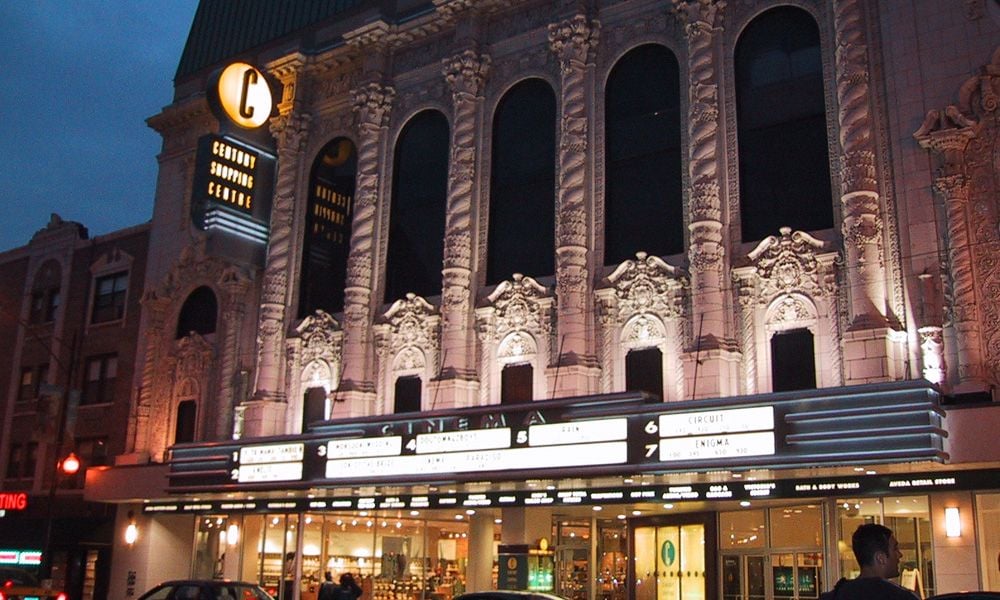
The 42nd edition runs April 16–27, exclusively at the Landmark Century Centre Cinemas, and it arrives carrying 51 features and 31 shorts from across Latin America and beyond. What it’s leaving behind this year is the traditional gala format — the fancy venues, the elaborate productions, the events that cost a fortune to stage. Instead, both Opening and Closing Night will be held right at the cinema, 2828 N. Clark St., kicking off at 5:30 p.m. with a reception at the Century Bar — appetizers, cash bar, DJ — before the main event at 7. After the credits roll, filmmakers take the stage for Q&A. Clean. Direct. Exactly what a film festival should be.
Vargas doesn’t sugarcoat the reason. Federal funding cuts are hitting cultural organizations hard, and the ILCC isn’t immune. But there’s something almost liberating in the way he frames it — not as a retreat, but as a realignment. Less spectacle, more cinema.
Opening Night: Venezuela Is Burning, and These Two Filmmakers Won’t Let You Look Away
If you want to understand why It Was Still Night in Caracas is exactly the right film to open this festival in exactly this moment, consider this: it was made by Mariana Rondón and Marité Ugás, two women who have spent three decades making films that refuse to be comfortable.
Rondón, born in Barquisimeto, Venezuela, and Ugás, born in Lima, Perú, are one of Latin American cinema’s great creative partnerships. They founded SUDACA FILMS together in the early ’90s. They’ve traded roles as director, writer, and producer across more than 25 years of collaboration. Rondón’s Pelo Malo won the Golden Shell for Best Film at San Sebastián in 2013 — the Spanish-language film world’s equivalent of a Cannes jury prize. These are not emerging voices. These are architects.
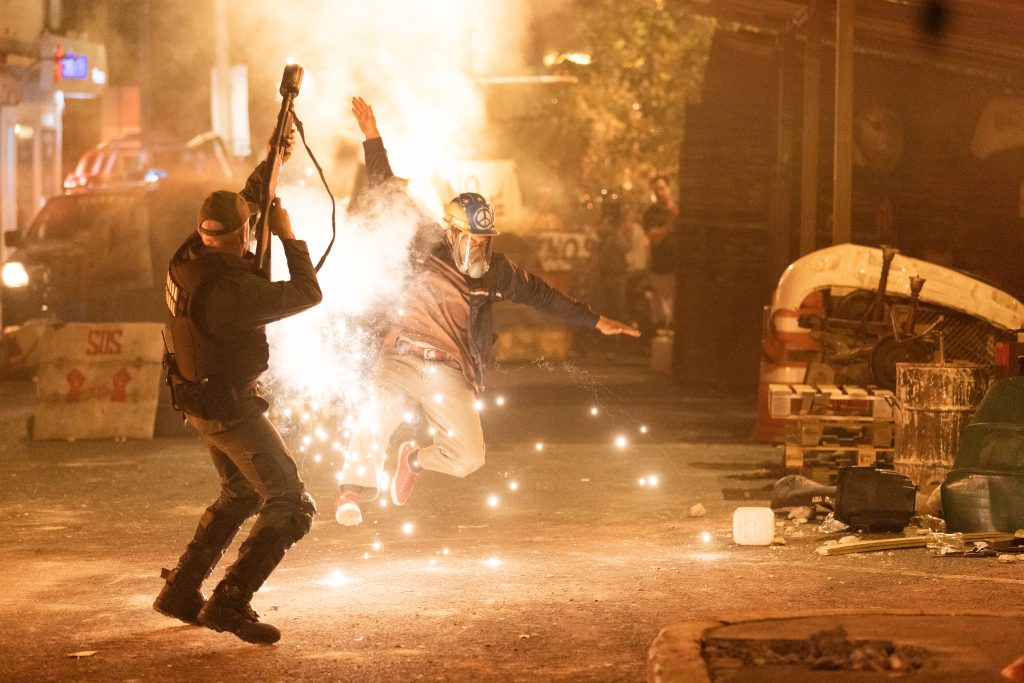
Their latest film drops you into Caracas, 2017. Adelaida has just buried her mother. She returns home to find her apartment occupied by regime loyalists. In the apartment next door, a corpse. The city outside is erupting. The walls are closing in. What unfolds is a claustrophobic, suffocating portrait of a woman forced to shed her own identity to survive — and a society doing the same thing at scale.
It’s the kind of film that doesn’t let you file it away as “foreign” or “political” and move on. As the Festival notes, it’s “a profoundly universal story about the right to exist.” In 2026, that sentence lands differently than it would have even five years ago.

Both Rondón and Ugás will be in Chicago for Opening Night on April 16 — and they’re not done. On April 17 and 18, they’ll present Zafari, their other recent collaboration: a surrealist slow-burn set in a depopulated Latin American city where a hippo named Zafari arrives at a dying zoo while a family watches from a crumbling high-rise, food and water running short, paranoia creeping in through the walls. If Caracas is the scream, Zafari is the silence before it.
Two nights. Two films. One of the most vital filmmaking partnerships working in Latin America today. That’s an Opening Weekend worth clearing your calendar for.
Closing Night: Ecuador Sends You Home Laughing (But Thinking)
If Rondón and Ugás open the festival by staring Venezuela’s collapse in the face, Pablo Arturo Suárez closes it with something deceptively gentler — and no less honest.
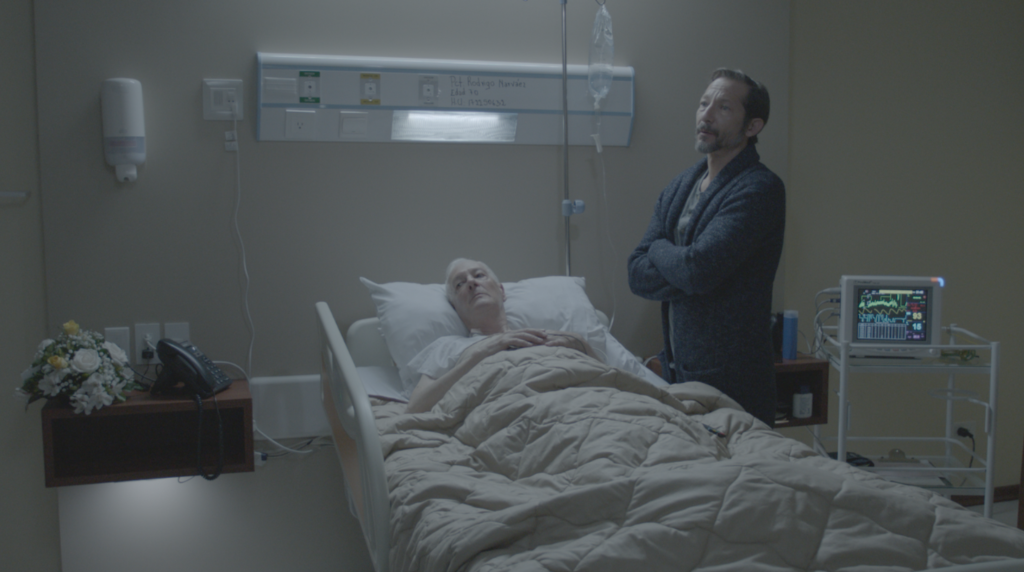
The Dog, My Father and Us is an Ecuadorean comedy about Sebastián, a man quietly falling apart. Lost job. Distant marriage. Strained relationship with his son. An aging father under the same roof. Then his younger brother shows up with a business proposal that’s equal parts absurd and desperate, and the family’s buried wounds surface all at once.
Suárez, who completed his Master’s in Directing at Barcelona’s prestigious ESCAC film school, has been building toward this kind of film his entire career — intimate, funny, emotionally precise. His short When the Morning Burst Forth screened at Cannes in 2013. His debut feature played internationally. Now he arrives in Chicago with a film that the Festival is betting audiences will leave talking about — not just the punchlines, but the thing underneath them: fathers and sons, vulnerability, the question of whether you can reconcile with the people you love before it’s too late.
Closing Night is April 27, sponsored by Royal Prestige and the Consulate General of Ecuador in Chicago. Suárez will attend.
The Tickets, The Passes, The Math
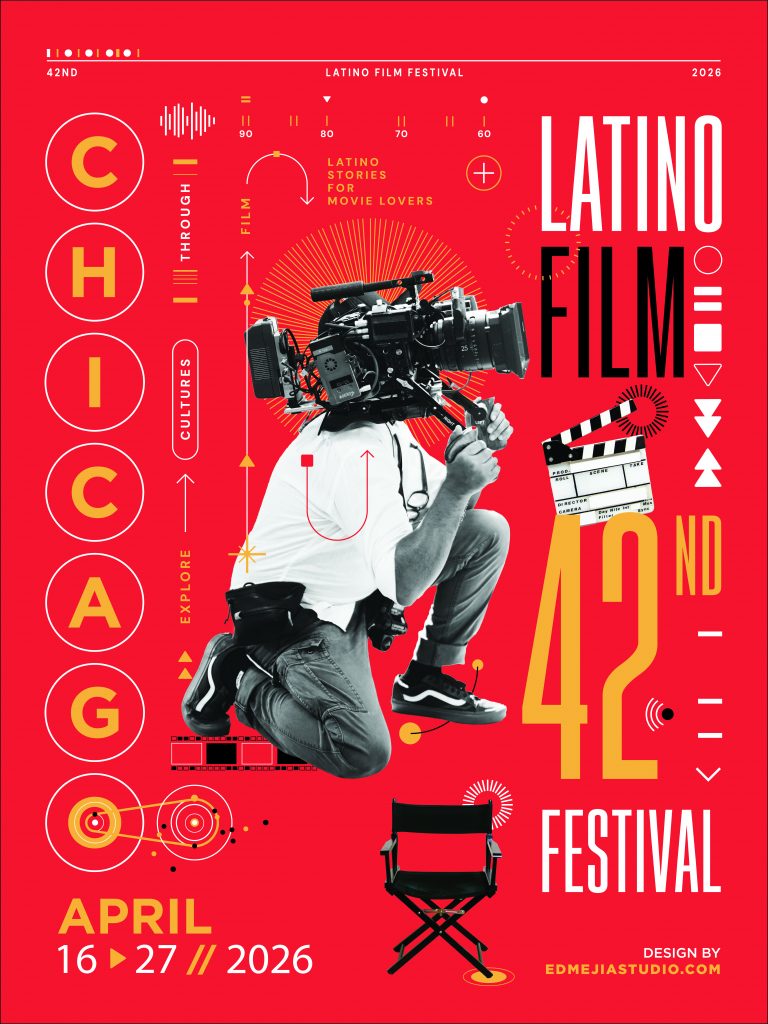
Tickets for Opening and Closing Night are $35 general / $25 for ILCC members, students, and seniors — and that includes the film, the reception, food, drinks, and live music. Business casual is strongly recommended.
For the festival at large, the move to make right now is the Festival Passport: 10 admissions for $110, saving you $70 off the regular $17 ticket price. That offer ends March 26. Individual tickets go on sale March 23. Passport give you 10 tickets to use as you see fit, go with 9 other friends, share with your partner or hog them all for yourself; at this specially rated price you may want to plan on buying several, they make great gifts for friends and family that love movies.

The full schedule drops mid-to-late March. Mark it and check back here on the official website where we will be dropping teasers, interviews and full on reportage of the Festival.
42 Years of Showing Up
In 1985, Pepe Vargas put 500 people in a room to watch Latino films. The cultural infrastructure for that kind of event barely existed. The audience he was trying to reach had almost no mirror in mainstream American cinema. He built the mirror.
Four decades later, the Chicago Latino Film Festival is one of the longest-running and most respected Latino cultural institutions in the country — a launchpad for filmmakers, a gathering point for communities, and proof that the stories coming out of Latin America, Spain, and the U.S. Latino experience don’t need a Hollywood co-sign to fill a room.
This year, the room is at the Landmark Century Centre. Eighty-two films. Twelve days. No gala required. Come as you are.
Consult the home page of chicagolatinofilmfestival.org for key information about the Festival as it happens.
The 42nd Chicago Latino Film Festival runs April 16–27 at the Landmark Century Centre Cinemas, 2828 N. Clark St., Chicago.