
Fifty-one films. Fifteen premieres. One festival that’s been doing this longer than most studios have been paying attention.
Forty-two years. Let that number sit for a second. When the Chicago Latino Film Festival screened its first batch of films in 1985, Reagan was in the White House, Miami Vice was the closest most Americans got to hearing Spanish on television, and the idea of a dedicated festival for Latin American cinema in a Midwestern city sounded like a beautiful, slightly delusional dream. Five hundred people showed up that year.
This April, when the lights go down at the Landmark Century Centre Cinemas on Clark Street, the festival that Pepe Vargas built from nothing will unspool its 42nd edition — 51 features, 31 shorts, nine North American premieres, five U.S. premieres, and one world premiere — across twelve days that will, once again, prove that the most urgent, most fearless, most formally adventurous cinema being made anywhere on earth is being made in Spanish and Portuguese, often on budgets that wouldn’t cover craft services on a Marvel set.
And nobody in this building is apologizing for any of it.
Fireflies at El Mozote: A World Premiere That Became Something Else
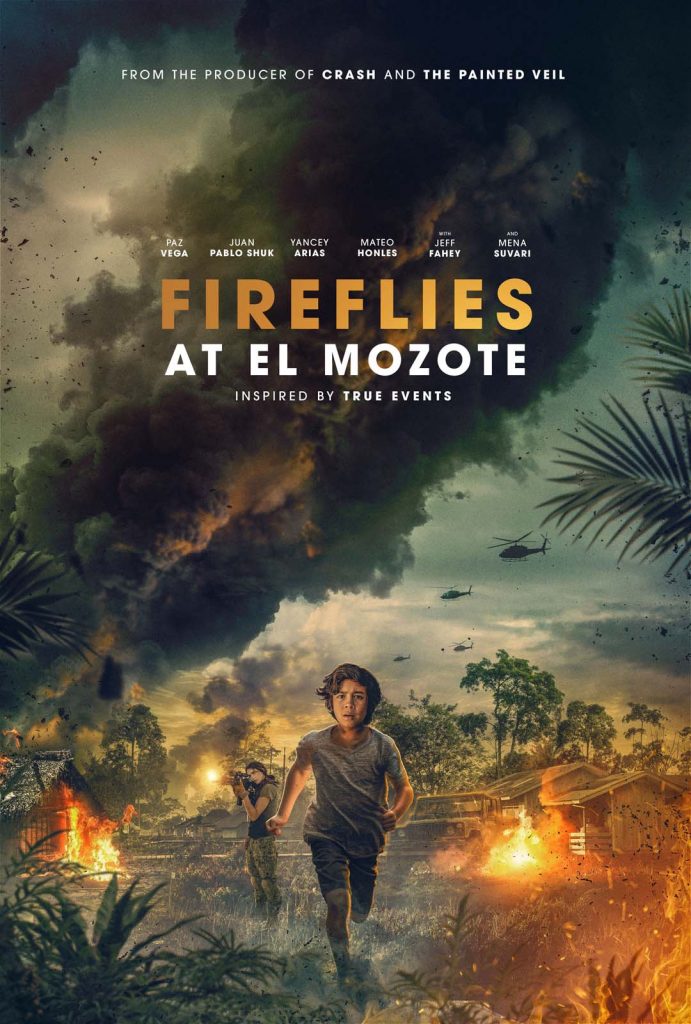
One of the most discussed films of this year’s lineup was destined to be a world premiere at the 42nd CLFF. “Fireflies at El Mozote”, written and directed by the late Salvadoran filmmaker Ernesto Melara, is one of the most anticipated Latin American films of 2026 — a harrowing, humane reconstruction of the December 1981 massacre at El Mozote, El Salvador, where Salvadoran government troops annihilated an entire village. The film follows José, a ten-year-old survivor found hiding in the rainforest, and centers on Paz Vega as Alma, the guerrilla fighter who pulls him back from the edge. The supporting cast includes Juan Pablo Shuk (Narcos), Yancey Arias (Queen of the South), Jeff Fahey, and Mena Suvari.
Produced by Moctesuma Esparza (Selena) and Magenta Light Studios, the film carries the full weight of its director’s legacy: Ernesto Melara passed away at 73 before he could see it reach audiences. Before his death, he dedicated the film to “the victims of war violence in El Salvador, and elsewhere throughout Latin America and the rest of the world.”
That world premiere was going to be Chicago’s.
Then, earlier this month, distributor Magenta Light Studios announced it would release Fireflies at El Mozote theatrically across the United States beginning April 17, 2026 — just one day after the festival opens — with simultaneous openings in Los Angeles, New York, Miami, Chicago, and Houston. The world premiere that was curated for CLFF audiences became a commercial theatrical release instead, launching in the middle of the festival itself.
The film remains an Official Selection of the 42nd Chicago Latino Film Festival, and Chicago audiences will still be among the first in the world to see it on the big screen.
The Films That Are Going to Haunt You
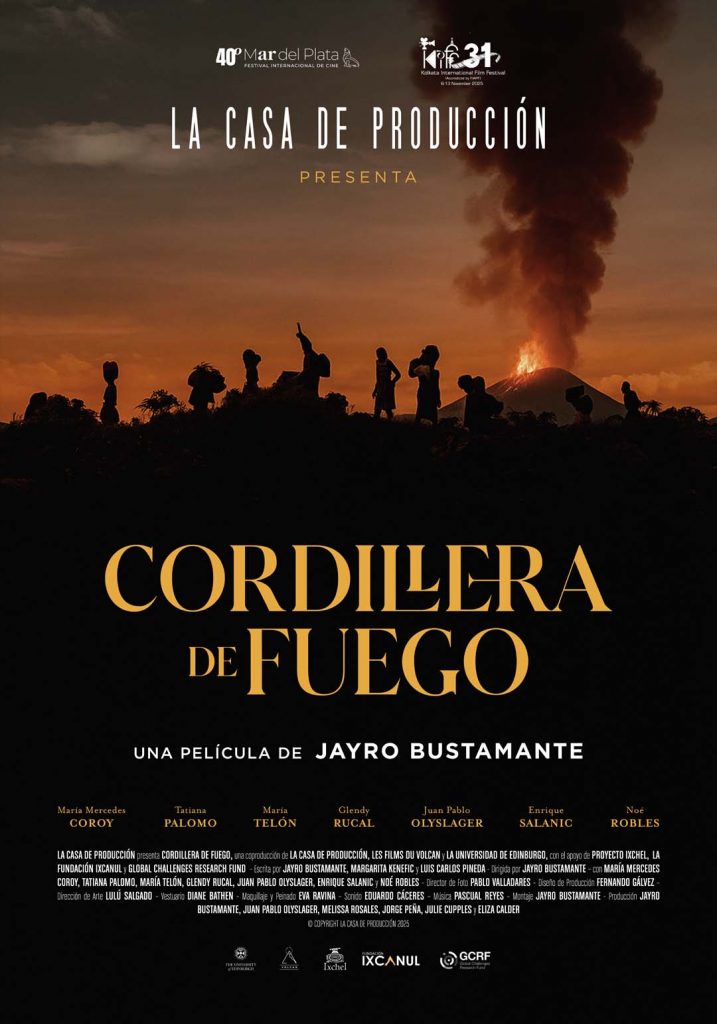
Then there’s Jayro Bustamante. If you know the name, you already cleared your schedule. The Guatemalan director behind Ixcanul and La Llorona — two films that redrew the map of what Central American cinema could be — returns with Cordillera de fuego, a story of indigenous volcanologists fighting government corruption to save their communities from an active volcano that the powers in Guatemala City see as nothing more than a business opportunity. The film grew out of the Ixchel Project, a UK-funded research initiative into volcanic disasters in Guatemala, and Bustamante has turned the science into something visceral: a film where the earth itself is a character, and the people who understand it best are the ones the system refuses to hear.
Colombia sends a gut-punch. Noviembre, from first-time director Tomás Corredor, locks the audience inside a bathroom in the Palace of Justice during the M-19 guerrilla takeover of November 6, 1985 — seventy hostages, a nation cracking apart, and tanks blasting through the walls. Corredor stages the entire film in that enclosed space, and the claustrophobia is the point. You don’t watch this movie. You survive it.
Puerto Rico — which has been quietly producing some of the most inventive independent cinema in the hemisphere — brings two entries that couldn’t be more different. De tal palo, from Iván Dariel Ortiz, is the tender, devastating story of a grandfather with early-onset Alzheimer’s who takes custody of his granddaughter after her father’s violence drives them apart, and finds in art and photography a language that memory loss can’t steal. Borealis, from cinematographer-turned-director Heixán Robles, goes full sci-fi: a solar flare wipes out all human memory, and a woman whose only clue to her identity is a C-section scar sets out to find her child in a world where new power structures are already rising from the chaos. It’s Philip K. Dick by way of San Juan, and it sounds absolutely electric.
Argentina delivers twice. Death of a Comedian, the directorial debut of actor Diego Peretti — financed by a crowdfunding campaign of more than 10,000 micro-investors — follows a dying actor who abandons everything and flies to Brussels to chase down his favorite comic book artist, tumbling into an adventure that blurs the line between graphic novel and reality. And Writer, from Paula de Luque, dramatizes the true story of Rodolfo Walsh, the young translator who, in the wake of a 1956 massacre carried out by Argentina’s military dictatorship, hunted down a survivor and produced Operation Massacre — one of history’s first non-fiction novels, years before Truman Capote put pen to paper for In Cold Blood. That Walsh’s work remains less known than Capote’s is one of literature’s great injustices. This film intends to fix that.
From Mexico, 1938: When Mexico Recovered Its Oil arrives after a twenty-year production odyssey by director Sergio Olhovich, dramatizing the moment President Lázaro Cárdenas stared down British and American oil companies and nationalized Mexico’s petroleum reserves. Given the current global oil crisis triggered by the war in Iran, a film about a Latin American president who decided his country’s resources belonged to his country has a resonance that no one could have predicted when Olhovich started shooting. Sometimes history writes the press kit for you.
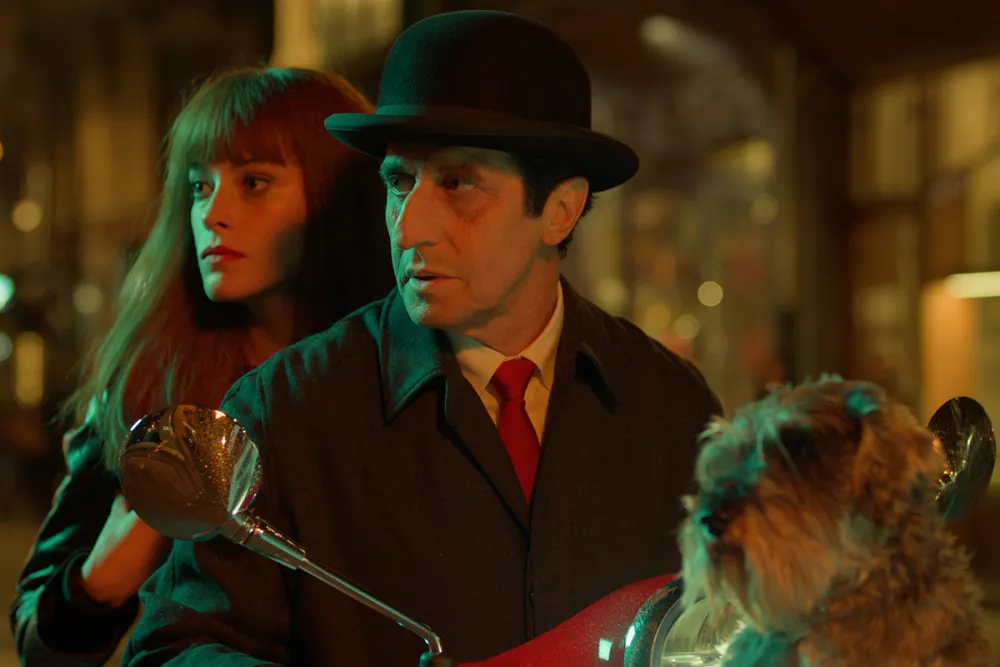
Uruguay’s The Whisper throws children, hidden cameras, snuff film rings, supernatural powers, vampires, and folk horror into a single blender and dares you to look away. Honduras offers Eva, a quietly radical debut about a trans grandmother who takes custody of her grandchild. Chile sends Isla Negra, a power struggle set on the coast where Pablo Neruda spent his final days. Brazil brings Five Kinds of Fear, a collision of five lives across Rio’s class divides. Paraguay delivers a house haunted not by ghosts but by the actual ghosts of its national history — the Chaco War, Stroessner, the whole bleeding timeline.
Every one of these films exists because somebody decided a story needed to be told more than it needed to be funded.
The Festival

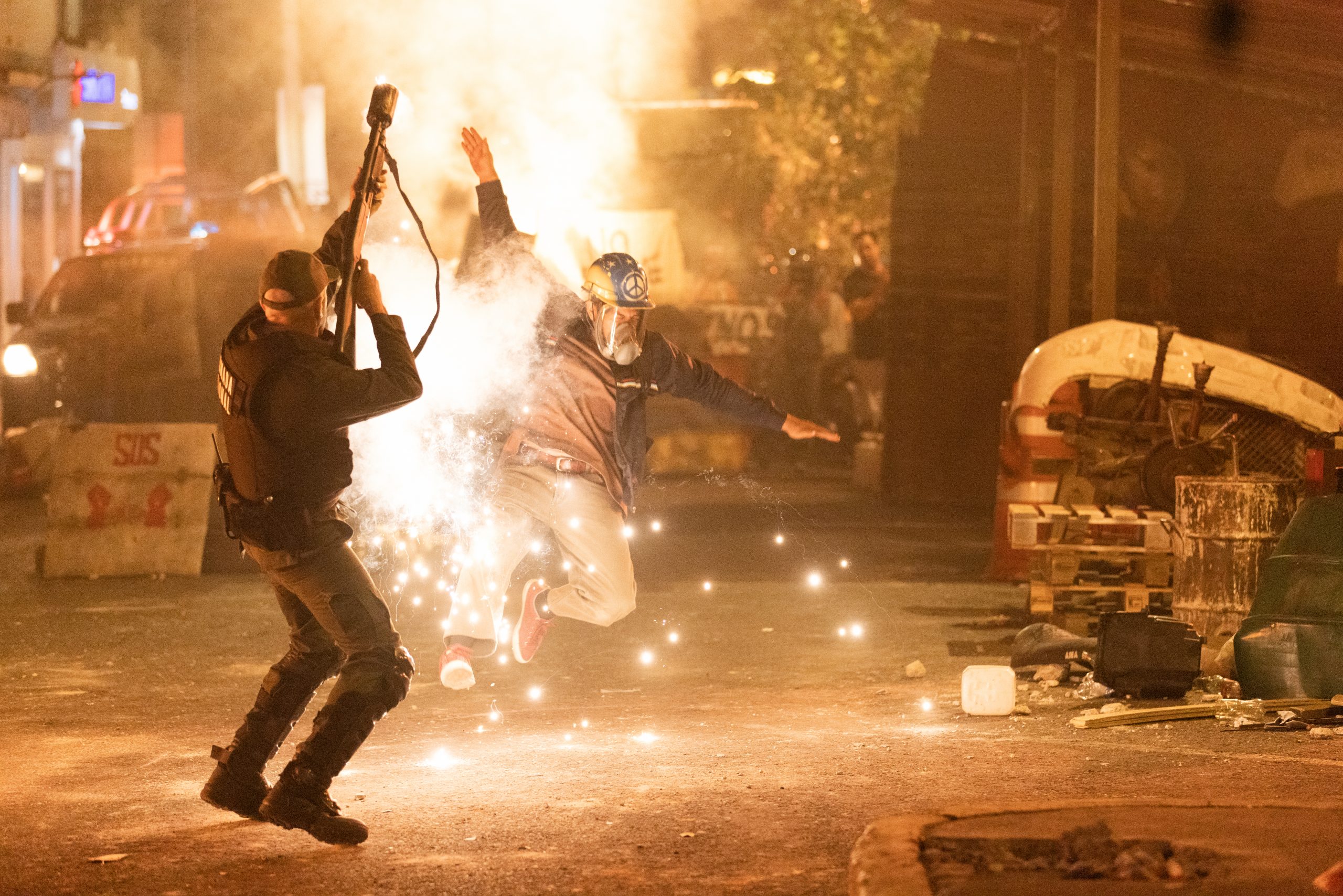
Opening Night, April 16: It Would Be Night in Caracas, Mariana Rondón and Marité Ugás’s dystopic vision of modern Venezuela. Closing Night, April 27: The Dog, My Father and Us, Pablo Arturo Suárez’s Ecuadorean comedy. In between, twelve days of cinema that treats its audience like adults — which is to say, it doesn’t explain Latin America to you. It puts you inside it and trusts you to feel.

All screenings at Landmark Century Centre Cinemas, 2828 N. Clark Street. Festival passes — ten admissions for $110, a $70 savings — are available now at chicagolatinofilmfestival.org through March 26. Individual tickets go on sale March 17 at $17 each. The full schedule drops late March.
Why This Festival Still Matters
Here is what you need to understand about the Chicago Latino Film Festival: it doesn’t exist because the market demanded it. It exists because a handful of people in 1985 believed that Latin American stories deserved a screen, an audience, and a city that would show up. Forty-two years later, the audience has grown from 500 to more than 50,000. The festival has birthed the International Latino Cultural Center of Chicago, which now produces year-round programming across music, dance, visual arts, comedy, theater, and film — including the Chicago Latino Music Series, now in its 20th year, and Film in the Parks, also celebrating its 20th season.
The film industry has spent the last decade congratulating itself for “discovering” Latino audiences. The CLFF didn’t need to discover them. It built them. Cultivated them. Showed up for them every April for four decades, in the cold, in a Midwestern city that Hollywood still thinks of as a flyover, screening films in languages and from countries that the Academy doesn’t always remember exist.
Fifty-one films. Thirty-one shorts. Fifteen premieres. Twelve days. One festival that has never, not once in forty-two years, waited for permission to put Latin American cinema on the screen or has flinched in doing so.
The screen, as it turns out, was never going to be silent. Not here. Not in Chicago.
The 42nd Chicago Latino Film Festival runs April 16–27, 2026 at Landmark Century Centre Cinemas, 2828 N. Clark Street, Chicago. For tickets, passes, and the full schedule, visit chicagolatinofilmfestival.org.
The Chicago Latino Film Festival is produced by the International Latino Cultural Center of Chicago.
Comments
comments are closed.